
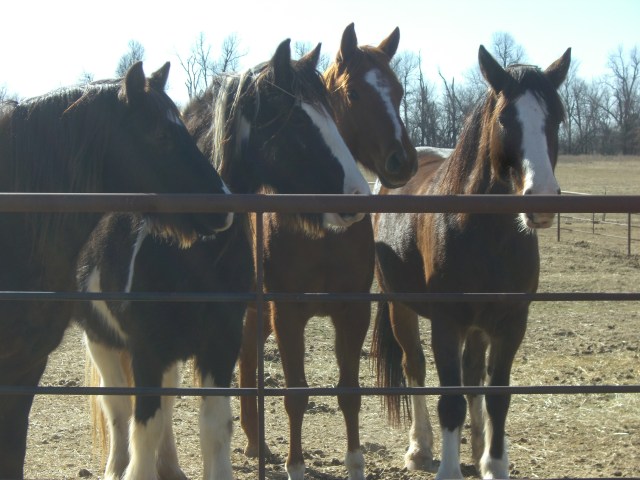
The boys enjoying a break and checking our the new kid!
The boys enjoying a break and checking our the new kid!

While the boys were checking out the new kid, Otis was just as curious.
Every horse owner needs to know what is “normal” for their horse. Knowing how your horse acts and reacts when he is feeling good will help you know when there is something not quite right with him. Reporting all the signs before the vet arrives can often give a much clearer picture on the level of concern. Knowing your horse’s normal vital signs and comparing those numbers to times when you may suspect that he’s not well, can be a very helpful aid in determining how quickly he needs veterinarian help. Temperature: Take your horse’s temperature when he is healthy so you can get a normal reading for him. The normal temperature for horses is 100.0 degrees. However, that can vary somewhat with the season. Respiration: The normal rate is between 1 – 12 breaths per minute. However, many things can effect this and must be taken into consideration before determining if he’s abnormal. One factor is his temperature. Deep heavy breathing or breathing with abdominal effort, abnormal noise, laboured breathing or gasping are all indications of a serious problem. Report any observations that are anything but quiet and easy breathing. Mucus Membrane Colour: It’s pink! Gums that are pale, deep red, purple, overly yellow or have an appearance of small broken blood vessels are abnormal. Capillary Refill Time: After depressing the gums the colour should return within 1-2 seconds. Delayed return of colour, 3 seconds or more, is an indication of poor blood perfusion often brough on by dehydration, shock or other taxicosis. Borborygmus: This is the sound that your horse’s gut makes in digesting his feed. A horse should have normal gurgling sounds on both sides of his abdomen near his flank. During colic episodes, horses will have little or no gut sounds. Hydration State: The best way to determine hydration is to use the “pinch test”. The skin over the shoulder should be pinched. If it snaps back very quickly, the horse is adequately hydrated. Older horses tend to have more relaxed skin, so keep this in mind. Here is a handy chart for you to print and keep at the barn, http://www.ridenipomo.com/VitalSigns.pdf just fill in your horse’s information. |
Hi All….we are back again with the Adventures of Otis! Otis, being a curious colt, decided to check out the barn while his Mum was enjoying a bath! Being in pasture is one thing, being in the yard with new things is another! As we watch him check out the barn, the feed barrels, the wash rack and equipment….it occurs to me we can build on this curiosity through training or we can destroy it as we so often see with people who do not understand species other than themselves. Being the first sort…..committed to proper training with understanding and patience, Otis is assured a great start in life. His curiosity will come into play in every aspect of his ongoing time with the humans that live here.
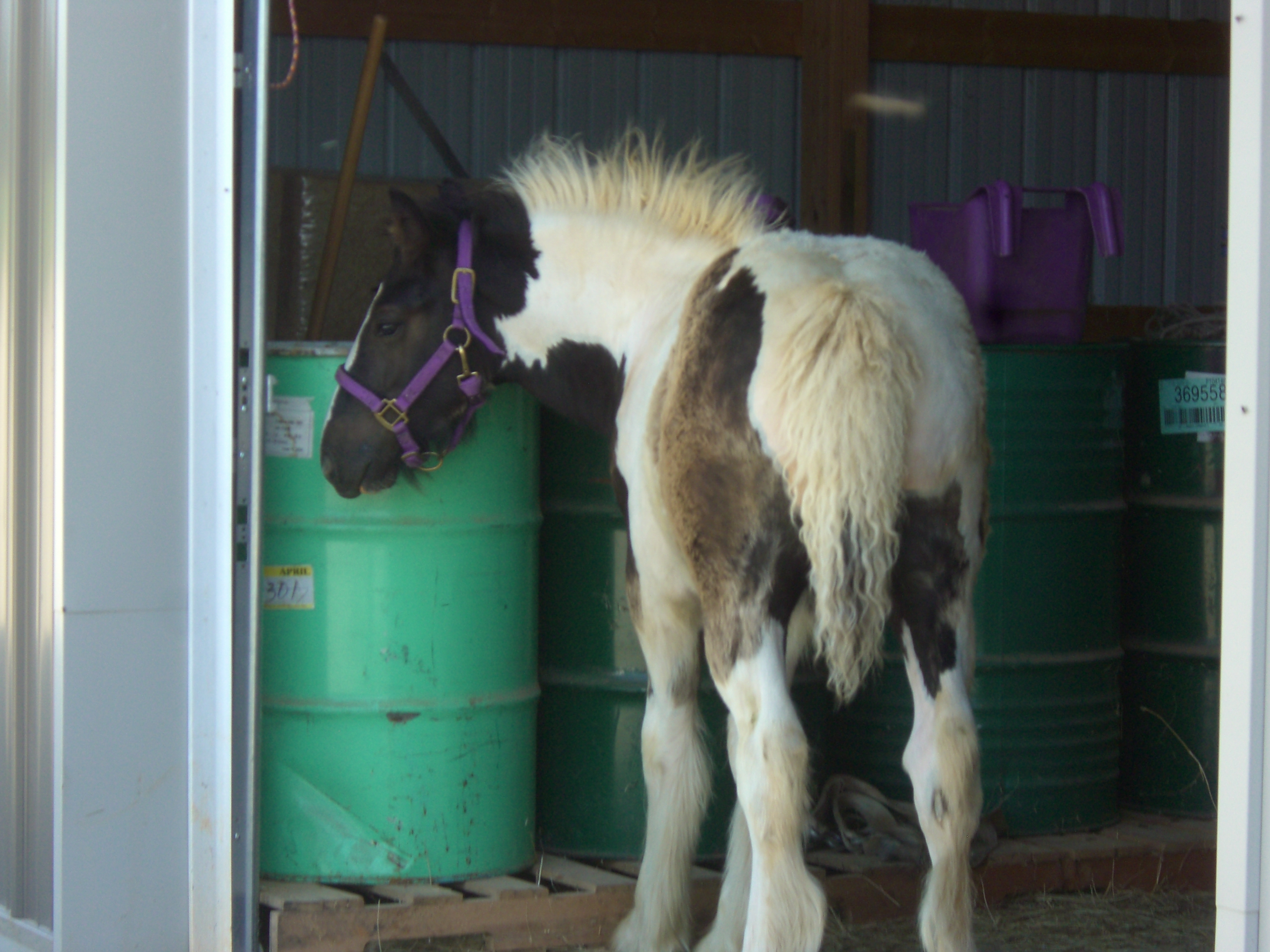
Investigating!
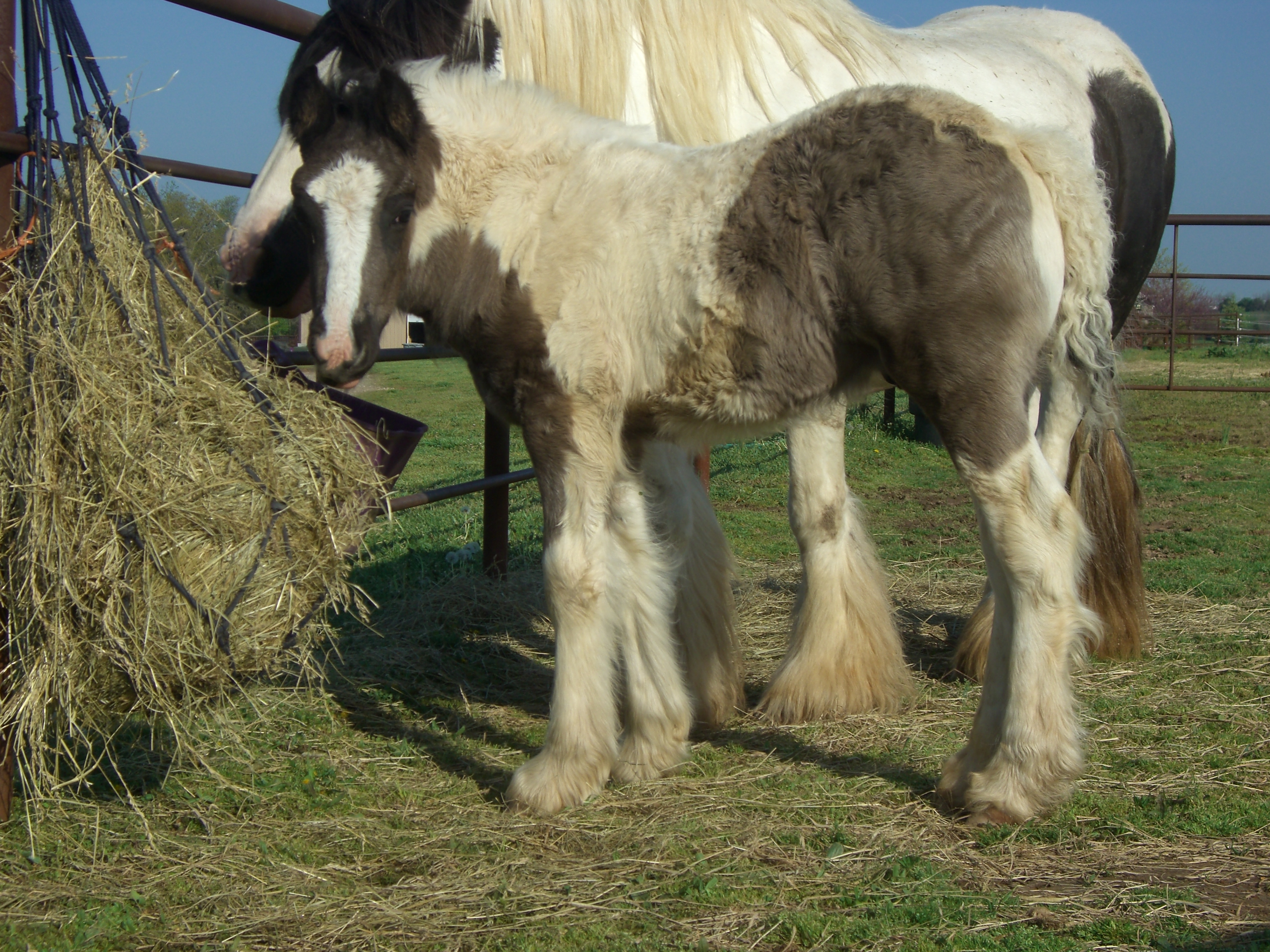
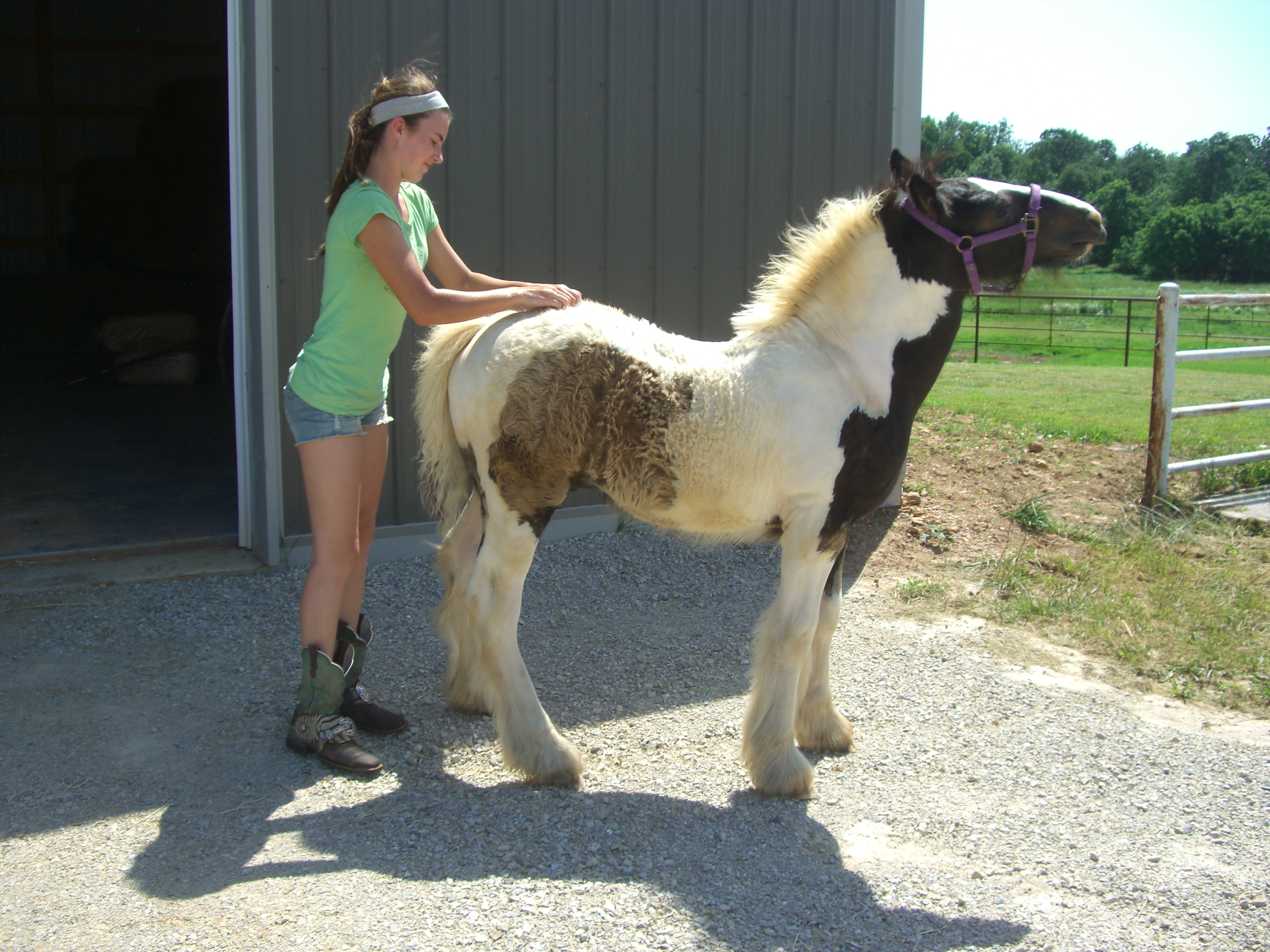
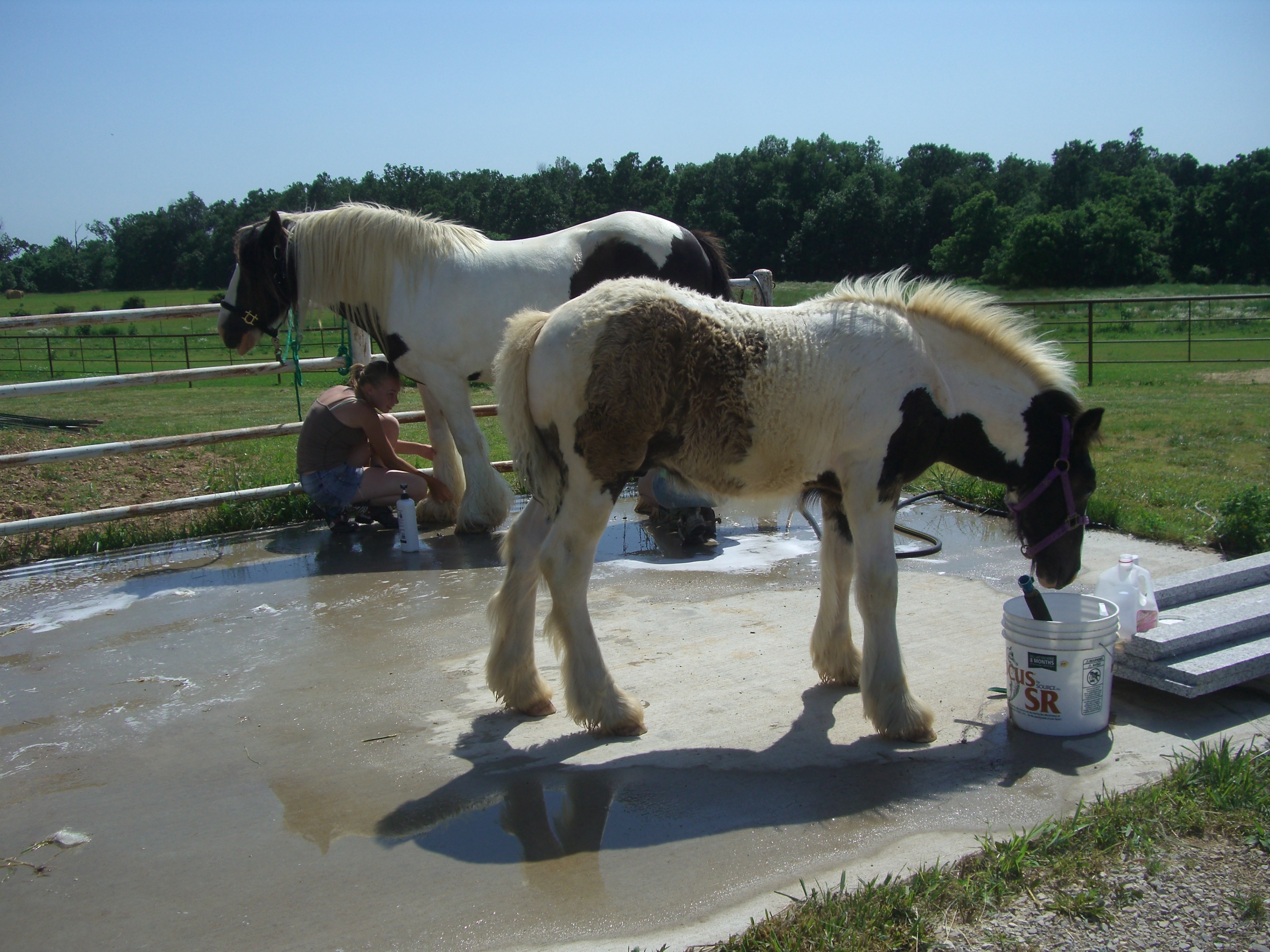
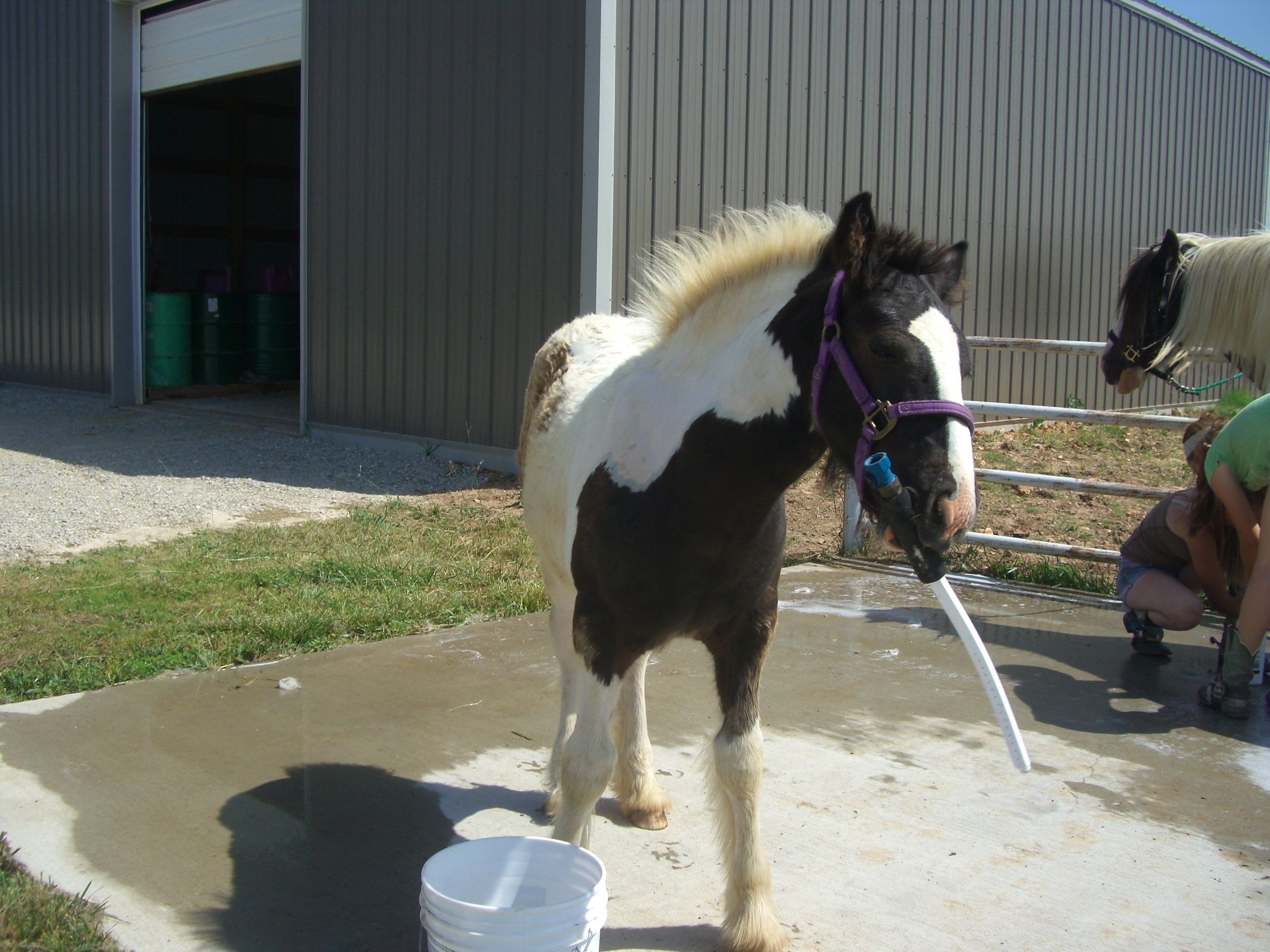
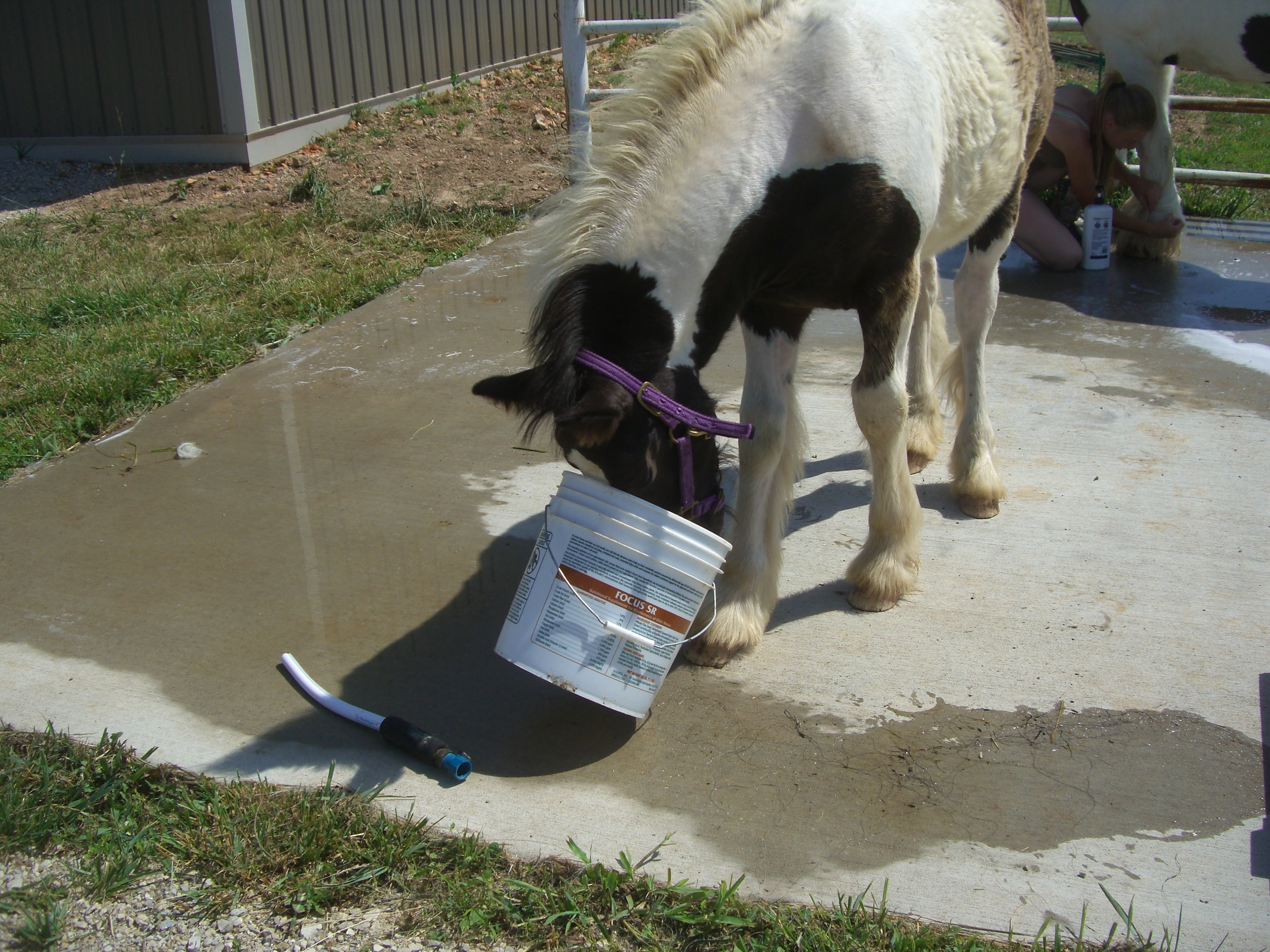
Helping!!!
More Helping!
CHF Otis came into this world on March 18th of this year. It was a stormy March day with plenty of mud to go around and poor little guy was having difficulty finding his sea legs! After a bit of thought, hay and straw with some shavings were brought out to give him some traction. It helped and afforded us time to handle him as one would for imprinting. (Handling legs, ears, face, sort of an all over massage!) It was cold and damp, which makes time seem to stand still, we decided to provide more than just good footing, so… by positioning ourselves behind him, we were able to give him the added support enabled the little guy to get to his feet and look for a warm meal. Once up, the mare, Lora, checked him all over, licking and nuzzling, some soft nickers and soon mom and babe where walking thru the muddy paddock toward a much dryer stall.
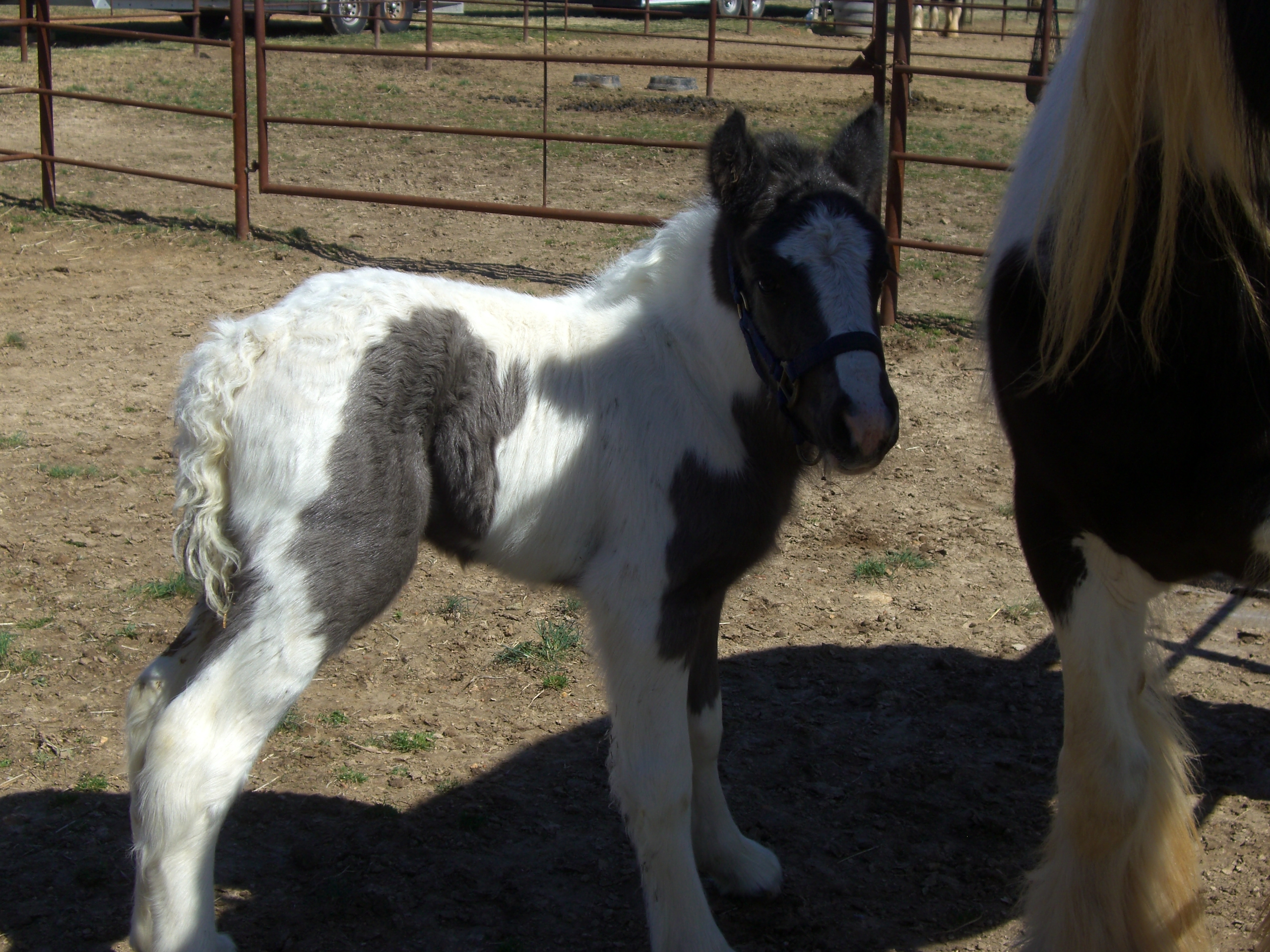
March 18.2013
Welcome
As show time approaches, it is past time to begin the work of fitting those we plan to show. We have preoccupied with the purchase of another farm which will provide hay for ourselves and others. There are young people eager to know more about horses so …..we step up to that plate as well. Breeding season has been long but over for now. Talbot’s Sparky is a little thin but in awesome shape and the newest addition CHF Otis is growing like a weed. So now we turn our attention to the coming shows. As we do not house our horses in stalls but provide ample pasture, their hair….manes, tails, and leg feather (NOTE: NOT feathers as are on birds, but feather as on draft horses such as Shire and Clydesdale) does take a hit in the looks department during extreme weather. With that in mind, when shows are approaching as they are now, we begin to condition mane, tail, and feather with (Tip of the day!) a NON sulfate conditioner that we apply Prior to shampooing, and reapply After shampooing. Manes are braided as well as tails, taken down every few days and the process is repeated. The result is a lovely mane, tail, and leg feather with growth and condition to go into the shows with. Regular grooming is a necessity and should be done daily….twenty minutes of curry and brush time…think of it is ‘wax on, wax off’ work as in the movie ‘Karate Kid”. You get in shape as well as provide the elbow grease needed to make for a pretty horse.

Talbot’s Sparky
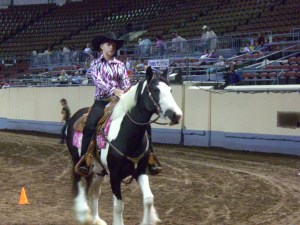
CHF Aggie and Josie at the Oklahoma State Fair Gypsy Show
After a show, it is time for reflection and assessment! There is always room for improvement and when you are trainer and breeder but not a professional show trainer, it is a growth process. Entering into the limelight is not easy and requires attention to detail. So to begin, a general check list is in order. Over time, this list will grow as you become more savvy with your wants and needs.
In the meantime, start now getting everything together…in buckets, covered bins, roll about trunks…whatever you can afford. Prior to leaving, start checking your list ( we will offer a detailed list later….this is just to get you thinking about organization!)
You will want to leave home with a Clean Horse, Clean Tack, Organized supplies (brushes, conditioners, clippers, washing needs as in a hose), Medical Kit ( your vet can help you put one together), Clean Show Clothes plus extra, just in case!… with clean place to hang and store till needed, and all essential paper work required for travel and show. When you get to the show grounds, it will be a bit hectic, but stay calm and organized.
Allow time for settling in and daily exercise on the show grounds. Day one will be spent setting up your area, checking against your list ( thank goodness, Walmart is usually close by) It is helpful to have a stall for cleaning and touch ups for the horse as well as one for the human contingent! For privacy, stall drapes will provide a place to quickly change an outfit or just sit and chill for a moment. A lunge line is useful as well as wraps to keep all that Gypsy hair cleaner. Speaking of which, having tried many things to brighten the whites, marking chaulk is brilliant. A hair dryer can be a handy item, but the chaulk will assist in the drying. This should be attended to on day one. One note here: Most horses travel without any problem. But, it is always advisable to administer a probiotic the day before you leave and for a day or two after arrival. It helps their system settle and the green soup is usually minimized.
More to follow…………………..
Thank you for taking time to read our very first blog using WordPress.com. We are commited to education and promotion of one the worlds newest breeds thanks to the Travellers or Romany Gypsy People. The breeds foundations include the Clyde and Shires of England Scotland crossed with native English ponies, the Fells and Dale. Given the pony hardiness and the gentle strength of the draft, we have a happy blending of characteristics. The Gypsy is a draft, it is gentle, it is very smart, and it is colourful! And so we begin….with some thoughts on the name Vanner.
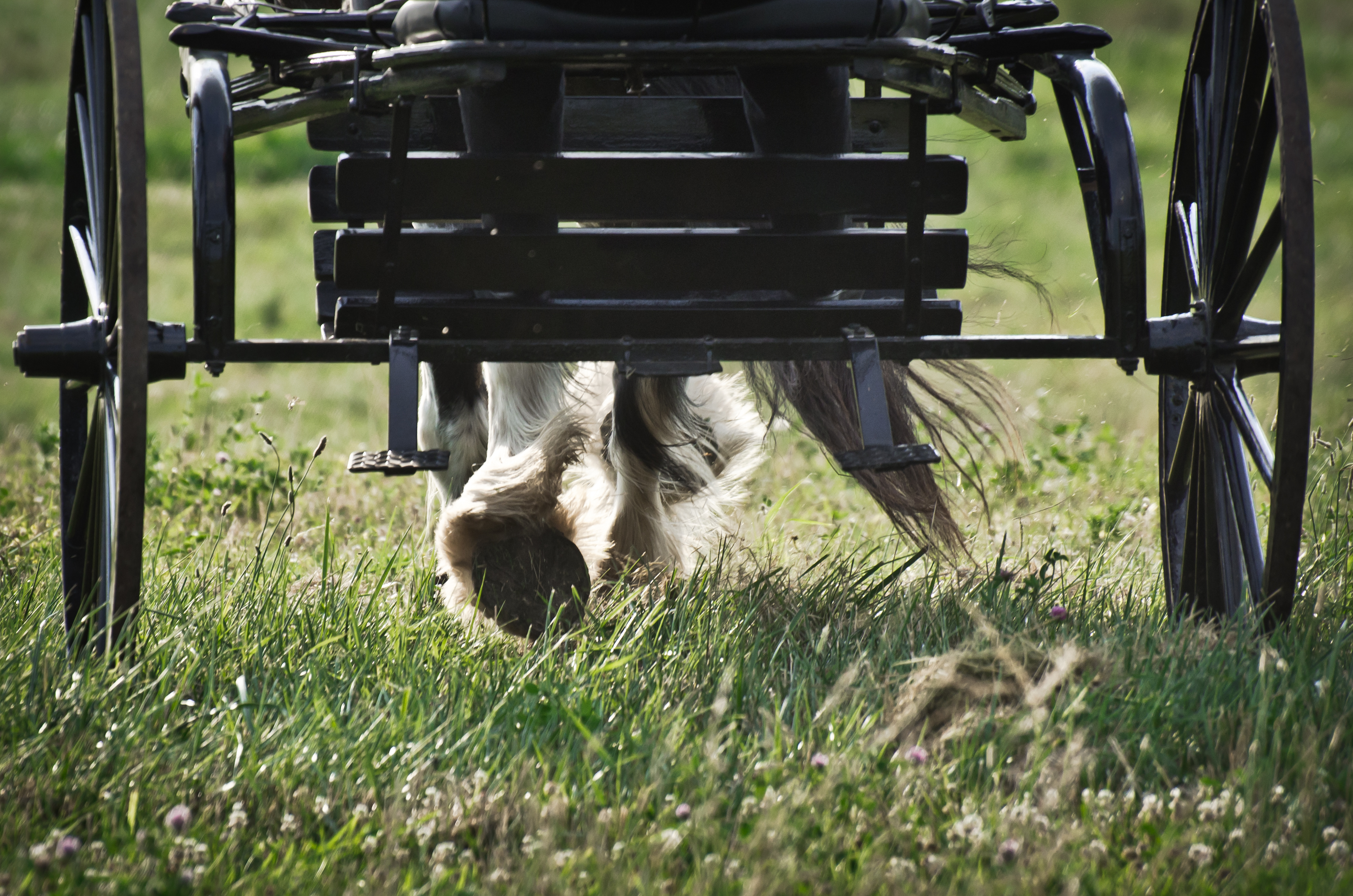
Welcome to WordPress.com! This is your very first post. Click the Edit link to modify or delete it, or start a new post. If you like, use this post to tell readers why you started this blog and what you plan to do with it.
Happy blogging!


 chocolatehorsefarmgypsyhorses